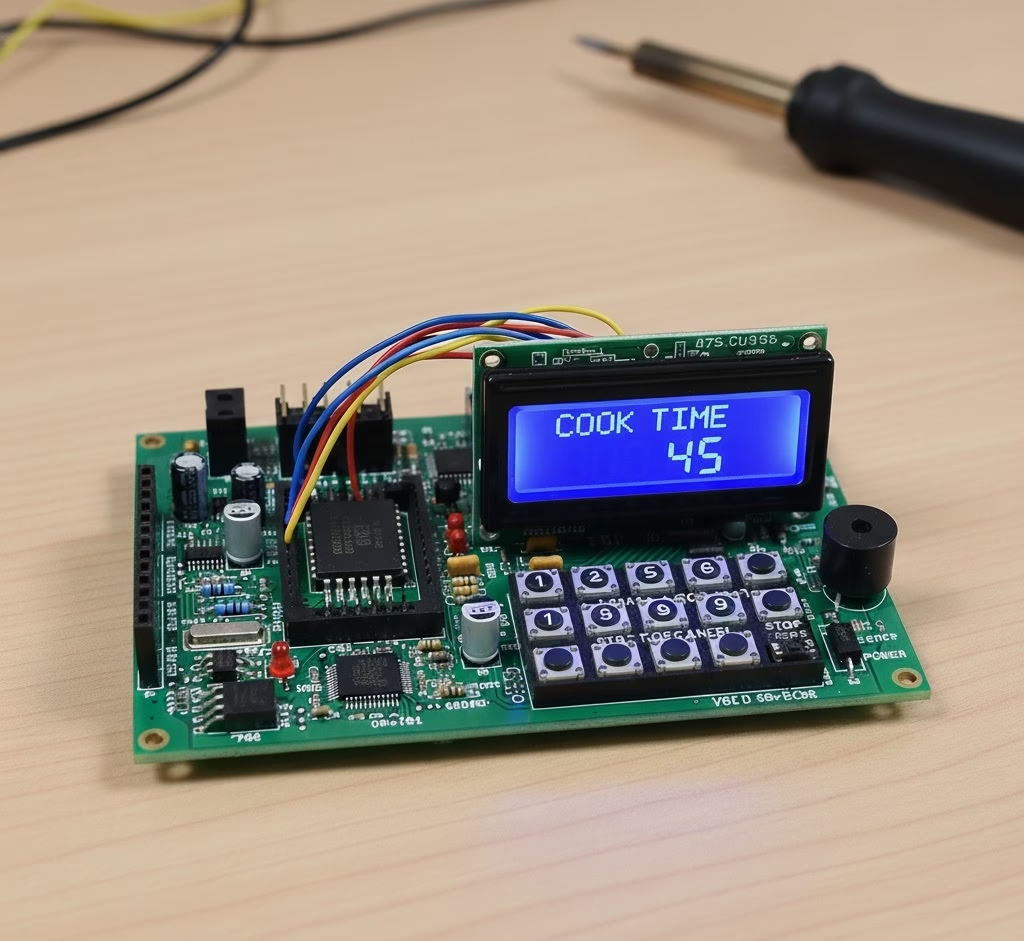
A microwave oven is an electronic appliance that is used to reheat previously cooked food or to cook a variety of food by means of electromagnetic radiation in the microwave range of frequencies. This mechanism of heating and cooking the food is fast and efficient. This project is based on a microwave oven controller design for a microwave oven. A user can place the food inside the microwave oven and can cook the food for a particular amount of time, which can be set by using the user interface of the microwave oven. An LCD display is used to display the current status of the oven, and also a timer countdown runs on the display, which tells the remaining time to the user. A buzzer beeps when the timer countdown reaches zero. Some push buttons are also interfaced with the microcontroller, which are used to set the time for cooking and start/stop the timer, etc. After elapsing the set amount of time on the timer, a sequence of beeps is generated by the buzzer to alert the person that the food is cooked or reheated for the desired amount of time.
Requirements
- Configurable time setting for heating
- Emergency stop button
- Beeps to alarm the person
- Timer countdown display
Required Components to Make it Happen
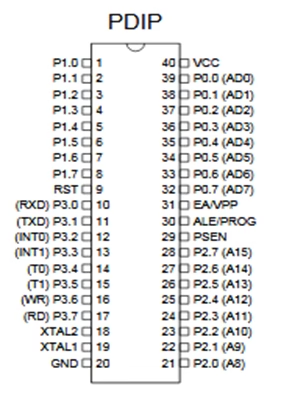
- Microcontroller ATMEL AT89C2051
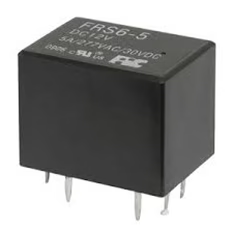
- 12V SPDT Relay
- 2N3904 NPN BJT Transistor
- 16×2 Character LCD
- Push Buttons
- Resistors
- Capacitors
- 12 MHz Crystal Oscillator
Microcontroller ATMEL AT89C2051
Here is the comparison of microcontrollers from which the most suitable one for this project is chosen:
| Comparison of Microcontrollers | |||||
|---|---|---|---|---|---|
| Sr. No. | AT89CXX | ROM | RAM | Timer | IO Pins |
| 1 | AT89C51 | 4KB | 128 | 2 | 32 |
| 2 | AT89C52 | 8KB | 256 | 3 | 32 |
| 3 | AT89C53 | 12KB | 256 | 3 | 32 |
| 4 | AT89C55 | 20KB | 256 | 3 | 32 |
| 5 | AT89C8252 | 8KB | 256 | 3 | 32 |
12V SPDT Relay
It is a mini 12Vdc operated single-pole double-throw (SPDT) relay which is used to turn the oven power ON or OFF. A signal from the microcontroller is fed to the relay, which then makes or breaks its contacts and hence controls the power input of the microwave oven.
2N3904 NPN BJT Transistor
It is a Small load driving transistor with 40V VCEO and 200mA collector operating current.
End User Functionality
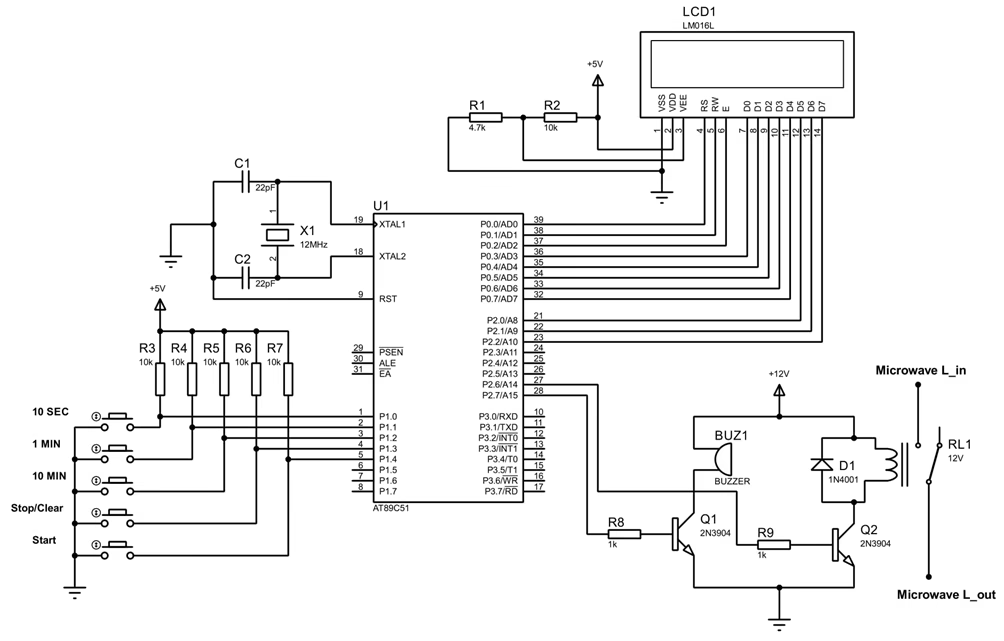
The microwave oven controller uses some push buttons, a 16×2 LCD, a buzzer, and a relay to perform the required actions. Three user push buttons are used for setting of the time for which one wants to heat the food. The “10 Sec” button increments the time by 10 seconds on every press. Similarly, the “1 Min” and “10 Min” buttons increment the time by 1 minute and 10 minutes, respectively, on every press. A “Stop/Clear” button is used to stop the countdown timer and, hence, the microwave oven by operating the relay. It is also used to reset the countdown time to zero. For example, if the user added the wrong time and wants to change it, then the user can press the “Stop/Clear” button and add the time again. If the oven is running, then the one-time pressing of “Stop/Clear” button will pause the microwave oven operatio,n but the countdown timer will be paused and a second time pressing of the “Stop/Clear” button will reset the countdown time of the microwave oven to 00:00. The countdown time is visible all the time on the LCD screen. When the time set by the user elapses, then a message “Done Cooking” is displayed on the LCD screen, meaning that the food has been cooked or reheated. Along with the “Done Cooking” message, the buzzer also beeps several times to alarm the concerned person. The buzzer also gives a beep on every press of any pushbutton, which means that the button is successfully pressed.
Functional Operation
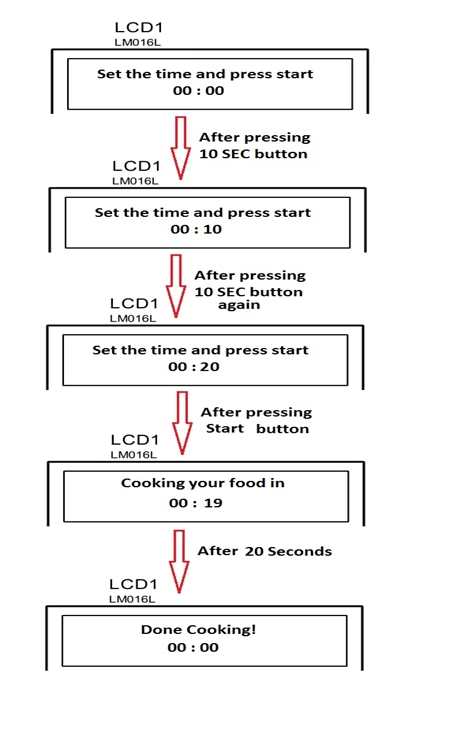
The microwave oven controller operates for the time duration based on the set time. A relay is connected with the microcontroller through a transistor, which can make or break the power input of the microwave oven. Similarly, a buzzer is also connected with the microcontroller through another transistor. When a user presses the start button after setting the time, the relay makes its contact, meaning that the path of current is completed and the microwave oven starts heating the food. When the set time has elapsed, the microcontroller sends a signal to the relay to make its contacts open, and hence the path of the current is no longer complete, and the microwave oven stops working. An example procedure is shown below:
Circuit Diagram
Conclusion
Developing an AT89C51-based microwave oven controller is a rewarding journey into the heart of embedded systems. We’ve explored the fundamental components, from the AT89C51 microcontroller and its accompanying LCD display for user feedback, to the tactile push buttons for setting parameters and the audible buzzer for timely alerts. This project not only enhances your understanding of real-world appliance control but also hones your skills in circuit design, microcontroller programming, and system integration.
By taking on a project like this, you gain practical experience that extends far beyond the kitchen, touching upon principles applicable to countless embedded applications. We hope this guide empowers you to not only replicate this “Efficient & Smart” controller but also to innovate further, customizing its features to your unique needs. The world of embedded electronics is vast and exciting – keep experimenting, keep building, and enjoy the satisfaction of bringing your smart ideas to life.